How Did The War in Vietnam Affect The Music Of The 60s & 70s?
Looking back on the history books of The Vietnam War I had no idea that it lasted over 17 years. I was born in 1956 so I was a bit young to remember it's impact on the world. My husband is a bit older was drafted out of college to serve in the Army and was shipped to Vietnam for 17 months. He was one of the lucky ones he came home in one piece. I do remember being in high school and the students protesting. As Americans back in the day, news was slow, nothing like today's media coverage of wars and protests. Social media has changed the world. News is instantaneous.
I just wanted to take a quick look at how the Vietnam War affected music in this time period. Of course we could look at the deaths, statistics and other horrible aspects of this war. But, I just want to touch on the evolution of music in this time period. Please remember I am not a journalist by any means. I do enjoy telling a story. I also had a bit of help from my friends. The link below is a history of the Vietnam War. I wonder if I would have been as "brave" or "stupid" as Jane Fonda today. Whatever your view, she still is criticized to this day.
 |
| Jane Fonda to this day takes heat for her remarks |
 |
With TV the war was televised for all to see.
|
From a cultural perspective, the war in Vietnam came in the
crux of shifting significance to the values of the United States. Youth were
diligently attempting to discover their own voice, while at the same time being
instructed in their responsibilities as citizens. Ten years previously, Elvis
had become a watershed moment, with the inclusion of traditionally black sounds
being improvised for a white audience. The distant shores of Africa were coming
closer, and the changes were being noticed by parents across the country. The
early days of Rock and Roll were a bump in the road compared to the movement on
the horizon.

For the sixties, the music scene had an uneasy sheen across
it. Popular music in the guide of Perry Como, of Sinatra and the rat pack as
well as the tenderness and innocence of similar genres lulled America into a
sense of status quo. By the early sixties, even the rollicking gyrations of
Elvis (who joined the Army in the late 50s) had gained acceptance among the older generations. However, this
complacency would not sit well in stark contrast to the war in southeast Asia.
Young men were being subjugated through the draft, their own perspectives and
free will usurped by a growing need to provide soldiers to be sent overseas.
While the older generation had their morally supportable conflict in Europe,
the war in Vietnam was nothing less than a maddening cycle of political
confusion paid for with American blood.
 |
| Many a women cried when Elvis went into the Army |
 |
| Burning your draft card was a way to protest. |
 |
| Uncle Sam wants you but you may not want him. |
Yes, Bob Dylan, 'The Times They Are A Changin'
In a revolt, the youth of America, as well as those attached
to the ‘British Invasion,’ the need to express their generations frustrations
and needs came to the forefront. While groups such as Strawberry Alarm Clock
and the Beach Boys clung to a softer message, groups such as Jefferson Airplane
and Crosby Stills and Nash were attacking the problems headlong. Now, popular
music spoke of anger and frustration, of helplessness and antisocial behavior. Bob Dylan with "These Times They Are A Changeing" (went on to earn The Nobel Prize) sang in sorrow. The sounds of protest weren’t simply a need to raise signs and voices, but to
also raise the level of music.
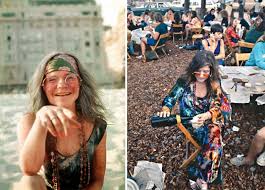
Woodstock "Summer of 69" evolved into a three day festival in Bethel, NY and would culminate the celebration of the sounds of
revolution, playing to a crowd of thousands. Peace Love and Rock N Roll was what it was all about. Headliners
such as Jimi Hendrix, Janis Joplin, CCR, Joan Baez, Santana, Sly & The Family Stone, The Who, Jefferson Airplane, The Band, Joe Cocker and many more bled the music before the masses with
gut-wrenching performances.

Music was fast-forwarding through its teen-aged years,
prompted by a war across an ocean that promised to consume the youth of
America. In response, the young rose to their own accord and lay a new path
with a revolution of popular music. The massacre at Kent State University in 1970 brought on a ever explosive atmosphere to students everywhere. Four died and 10 hurt but the students were heard.

It's hard to roll this all up into one little story, music and culture are a sign of the changing times. We can unite in our fears and turn troubled times into music to ease our pain. I guess the one song sung by Marvin Gaye in 1971 "What's Going On" words "Father, father, we don't need to escalate/ you see, war is not the answer, for only love can conquer". Pretty much sums up what we need. So this is the end of my thoughts for today. Below are some interesting links for your pleasure.